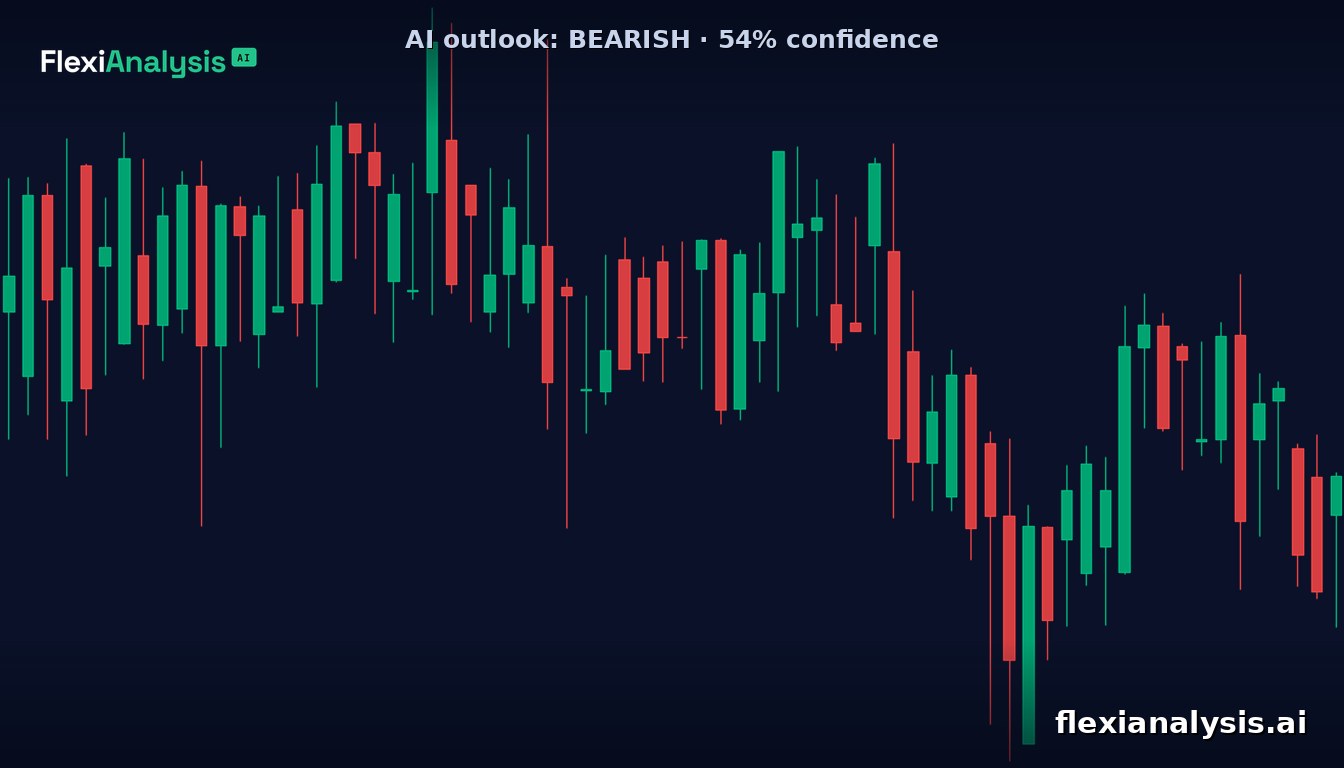
Our AI model leans bearish on the Russell 2000 with 53.7% confidence over 24 hours. The Russell 2000 forecast shows small-cap weakness as the index trades near critical support at 2,980.50.
The Russell 2000 faces modest selling pressure today. Our trained neural-network model currently favours a bearish direction with 53.7% confidence. The Russell 2000 forecast from our AI system reflects recent small-cap underperformance versus large-cap peers. At 2,980.50, this benchmark sits in a critical zone where momentum could shift either way.
Russell 2000 Forecast: What the Model Sees
Our AI model's bearish lean reflects weakness in small-cap relative strength and fund-flow patterns. The Russell 2000 has underperformed large-cap stocks this week—a signal our system weights heavily. The 53.7% confidence indicates a modest but meaningful edge for traders watching intraday moves.
Small-cap stocks are highly sensitive to interest-rate expectations and credit conditions. Macro data releases today could amplify volatility in the Russell 2000. Our model monitors headline risk and sentiment shifts closely. For broader context, compare this with our our S&P 500 analysis to see how large-cap sentiment differs from small-cap weakness.
The Russell 2000's composition—dominated by domestic-growth-sensitive companies—means it often leads or lags the broader market by hours. This makes intraday trading particularly active and unpredictable without real-time data.
Key Levels and Two-Sided Risk
At 2,980.50, the index sits near support that has held intermittently over recent sessions. A break below this zone invites further selling toward 2,950 and beyond. Conversely, a move above 3,010 would challenge the bearish bias and suggest consolidation instead of directional weakness.
Two-sided risk is real and material. Our model expresses probabilities, not certainties. Earnings surprises, sector rotation, or unexpected economic data can flip sentiment quickly. Retail traders should note that small-cap volatility tends to spike on low-volume days. Today's session volume and intraday range matter as much as directional bias.
If you hold Russell 2000 exposure, consider whether your risk/reward aligns with potential near-term pullback scenarios. Position sizing and stop-loss discipline matter more than directional conviction alone.
Want to track how our AI model performs over time? Review our verified AI trading results to see historical accuracy across indices and timeframes.
What Would Change This Outlook
The bearish bias holds as long as selling pressure persists and relative weakness continues. A sustained rally above 3,010 would signal consolidation rather than directional weakness. Positive earnings surprises or dovish Fed commentary could also reverse the model's current lean quickly.
This is educational commentary—not a recommendation to buy, sell, or enter any position. Always acknowledge that markets move on unexpected catalysts. For foundational context, refer to Investopedia's Russell 2000 definition and check economic calendars for today's data releases.
FlexiAI provides analysis for educational purposes only, not financial advice. Trading involves significant risk of loss.